

What Are Micronutrients? Vitamins, Minerals and Trace Elements, Simply Explained
Vitamins, minerals, trace elements and plant compounds, simply explained.
27 October 2026
In short
Micronutrients are substances your body needs only in small amounts but cannot produce itself, or not in sufficient quantities. They include vitamins, minerals and trace elements. Unlike carbohydrates, fats or protein, they provide no energy, yet they are involved in almost every process in the body.
Macro and micro: the difference
Macronutrients
Carbohydrates, fats and protein. We need them in grams. They provide energy and building blocks.
Micronutrients
Vitamins, minerals and trace elements. We need them in milligrams or micrograms. They provide no calories.
The four groups
| Group | Examples | Good to know |
|---|---|---|
| Vitamins | A, D, E, K, C and the B vitamins | Fat-soluble (A, D, E, K) or water-soluble (C, B vitamins) |
| Minerals | Calcium, magnesium, potassium | Macrominerals: the body needs more of these |
| Trace elements | Iron, zinc, selenium, iodine | Needed only in traces, but essential |
| Plant compounds | Botanicals from fruit, vegetables and herbs | Secondary plant compounds, part of a varied diet |
Why your body needs them
Micronutrients rarely work alone. They work together. A few examples of the health claims authorised in the EU:
Vitamin C
Contributes to the normal function of the immune system.
Magnesium
Contributes to normal muscle function.
Vitamin B12
Contributes to normal energy-yielding metabolism.
Zinc
Contributes to normal cognitive function.
Selenium
Contributes to the protection of cells from oxidative stress.
Vitamin D
Contributes to the maintenance of normal bones.
No nutrient works alone. It is the interplay that counts.
How to cover your needs
Eat the rainbow. Vegetables, fruit, whole grains, legumes, nuts and seeds provide most micronutrients.
Seasonal and fresh. The fresher and less processed your food, the more nutrients it keeps.
Sun for vitamin D. In summer your skin makes vitamin D. In the Swiss winter months, the sun usually isn't strong enough.
Supplement where it counts. If everyday life doesn't reliably cover your needs, a food supplement can secure the basics.
Frequently asked questions
What is the difference between vitamins and minerals?
Vitamins are organic compounds, some of which are made by plants and animals. Minerals are inorganic substances from soil and water that we take in through food.
Can you take in too many micronutrients?
Hardly through a normal diet. With supplements, keep an eye on the amounts, especially if you combine several products.
Do I need food supplements at all?
If you eat a very balanced diet, food covers a lot. In everyday life that doesn't always work out. That's when a supplement can make sense.
Do food supplements replace a balanced diet?
No. They complement a varied diet and a healthy lifestyle, but they don't replace them.
Micronutrients you drink
All the key nutrients. One spoon a day.
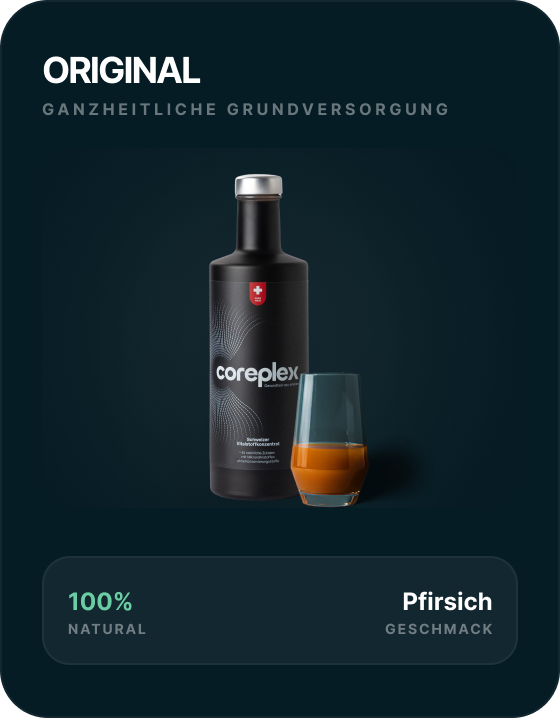
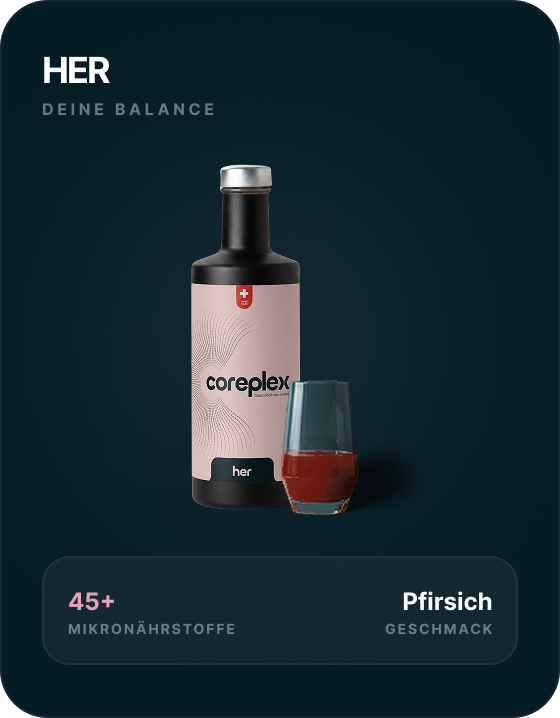
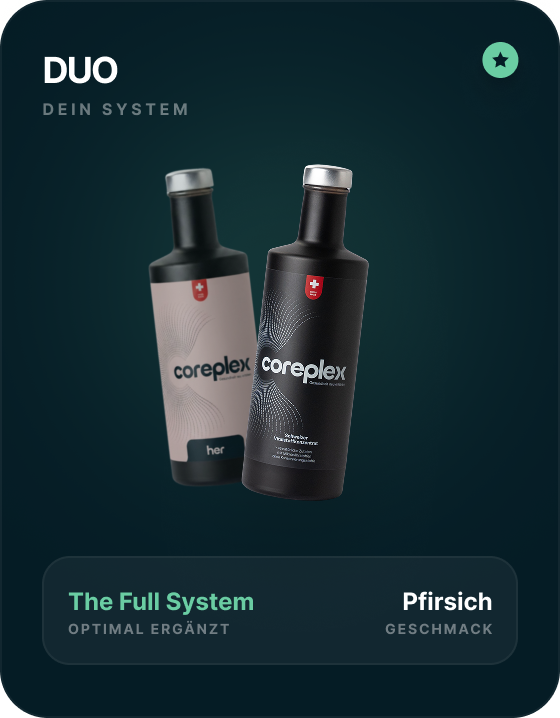
Coreplex combines vitamins, minerals, trace elements and botanicals in one liquid nutrient concentrate from Switzerland. 45+ nutrients, no preservatives.
Join the Club.
New articles, events and club offers first.
Free. Unsubscribe anytime. By signing up you accept our privacy policy.