

Micronutrients for Women: What Really Matters
Which micronutrients matter most for women, where to find them and when a supplement can make sense.
27 October 2026
In short
Women basically need the same micronutrients as men, but for some of them the requirements differ. Iron, folate, vitamin D and iodine in particular deserve attention. The foundation is always a varied diet. A supplement can make sense when everyday life doesn’t reliably cover your needs.
Why women have different needs
The female body goes through phases that change nutrient requirements: the monthly cycle, a possible pregnancy, breastfeeding and later menopause. Menstruation means the body regularly loses iron. When planning a pregnancy, professional bodies also recommend folic acid. And over the years, vitamin D and calcium become more important.
Then there’s everyday life: work, training, family and friends. When you’re on the go a lot, you don’t always eat as well as you’d like.
The key nutrients at a glance
| Nutrient | Why it matters | Found for example in |
|---|---|---|
| Iron | Contributes to the reduction of tiredness and fatigue. | Meat, legumes, oats |
| Folate | Contributes to maternal tissue growth during pregnancy. | Leafy greens, legumes |
| Vitamin B6 | Contributes to the regulation of hormonal activity. | Whole grains, bananas, nuts |
| Vitamin D | Contributes to the maintenance of normal bones. | Sunlight, oily fish, eggs |
| Iodine | Contributes to normal functioning of the nervous system. | Iodised salt, sea fish |
| Zinc | Contributes to the maintenance of normal skin, hair and nails. | Nuts, cheese, whole grains |
| Biotin | Contributes to the maintenance of normal hair. | Eggs, nuts, oats |
| Magnesium | Contributes to the reduction of tiredness and fatigue. | Nuts, seeds, whole grains |
The statements in the table are the health claims authorised in the EU for each nutrient.
What matters at each life stage
20 to 35
Busy days, often training. Keep an eye on iron and magnesium, especially with heavy periods or a lot of sport.
Planning a pregnancy
Folic acid is recommended even before pregnancy. Ask your doctor which supplement is right for you.
40+
Vitamin D and calcium for your bones become more important, especially vitamin D during the Swiss winter.
No nutrient works alone. What matters is getting the basics right, every day.
When a supplement makes sense
Get a blood test. If you often feel tired, have your doctor check your iron and vitamin D. That way you know where you stand.
Food first. Plenty of vegetables, legumes, whole grains and nuts cover a large part of your needs.
Close gaps where it counts. A supplement helps when everyday life doesn’t reliably cover your needs, for example when travelling or during stressful periods.
Don’t double up. If you take several products, add up the amounts.
Frequently asked questions
Do I need special vitamins as a woman?
Not necessarily. Basic needs are similar for everyone. There are differences for individual nutrients such as iron or folate, depending on your life stage.
How do I know if I’m deficient?
Tiredness or brittle nails can have many causes. The only way to know for sure is a blood test with your doctor.
Can I take food supplements during pregnancy?
During pregnancy and breastfeeding, always talk to your doctor or midwife before taking anything new.
Do food supplements replace a balanced diet?
No. They complement a varied diet and a healthy lifestyle, but they don’t replace them.
Made for women
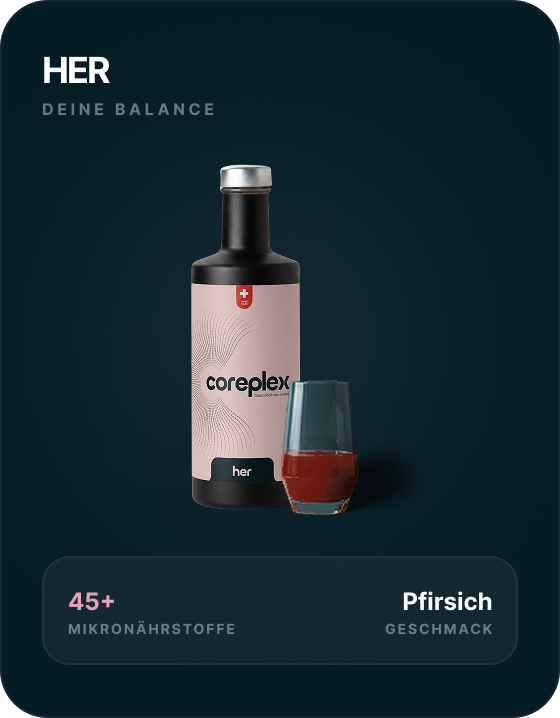
Coreplex HER. One spoon a day.
The full Coreplex base with 45+ nutrients plus 10 active ingredients made for women, including vitamin B6, which contributes to the regulation of hormonal activity. Liquid, no preservatives, Swiss made.
Join the Club.
New articles, events and club offers first.
Free. Unsubscribe anytime. By signing up you accept our privacy policy.